Erik Lehmann · 12 October 2026
Calabria's Pepper Growers Redirect Efforts Toward Global Buyers as Local Distribution Networks Evolve
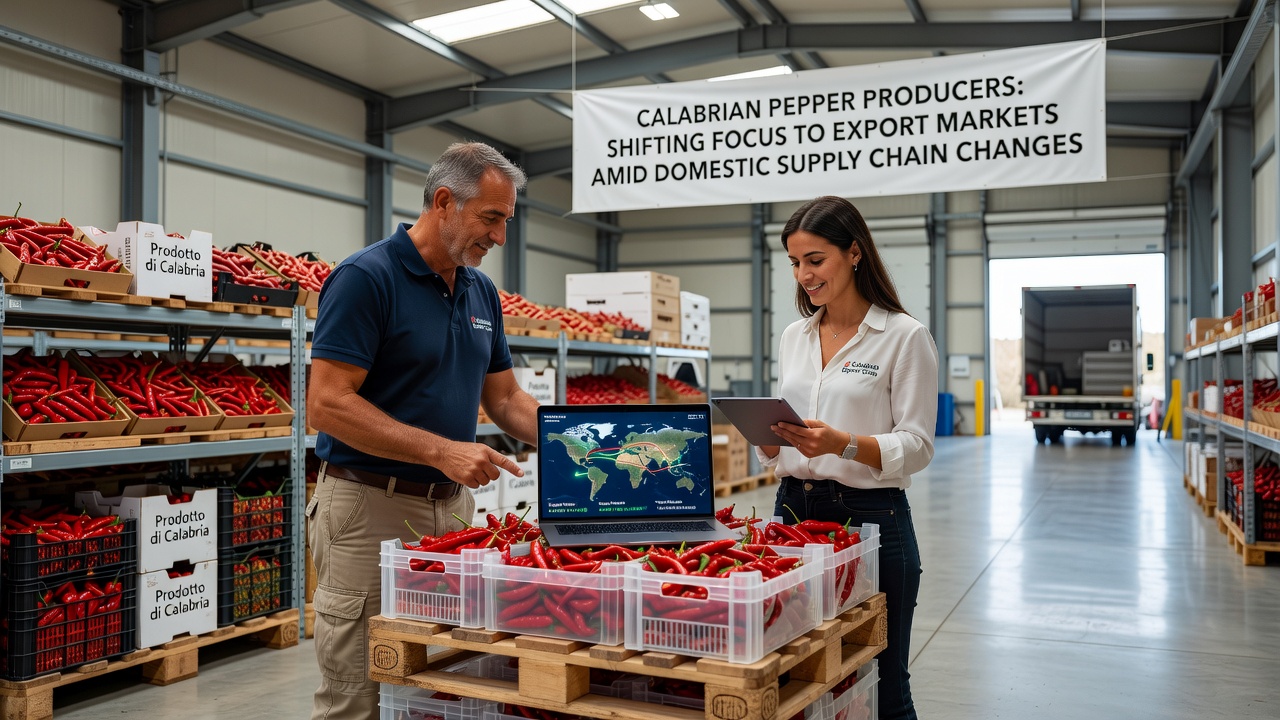
Calabrian pepper production has long centered on varieties such as the spicy red chili used for 'nduja and other preserved products, and recent adjustments in regional logistics have prompted growers to expand their reach beyond Italy. Data from the Italian Ministry of Agriculture shows that domestic transportation costs rose 18 percent between 2024 and 2026, while port handling delays in southern Italy increased average delivery times by four days for perishable goods. These factors have encouraged cooperatives in the provinces of Reggio Calabria and Cosenza to pursue direct contracts with distributors in Germany, France, and North America.
Supply Chain Adjustments Within Italy
Observers note that several regional trucking firms reduced service to smaller farms after fuel price spikes in 2025, and this contraction left many pepper growers seeking alternative routes to market. The Italian National Institute of Statistics recorded a 12 percent drop in intra-Italy shipments of fresh and semi-processed chilies during the first half of 2026, while cold-storage capacity in Calabria remained underutilized. Growers responded by consolidating loads at larger collection points near Lamezia Terme airport, where weekly charter flights now carry vacuum-packed peppers to northern European hubs. In October 2026, the Calabria Regional Agricultural Agency reported that 27 new export-oriented cooperatives had registered, each focusing on standardized packaging that meets EU phytosanitary requirements and additional certifications demanded by overseas buyers.
Export Growth and Market Destinations
Figures released by the European Commission trade database indicate that Italian chili pepper exports increased 23 percent year-over-year through September 2026, with Calabria accounting for roughly 41 percent of the volume. Shipments to Canada rose after the Comprehensive Economic and Trade Agreement simplified tariff procedures, and similar gains appeared in Australia following updated bilateral food-safety protocols. One cooperative near Nicastro secured a three-year agreement with a Toronto-based importer that requires monthly deliveries of 8 tons of dried pepper flakes, a volume that previously would have been directed toward Milan wholesalers. Another group in the Gioia Tauro plain began supplying a Frankfurt processor that blends Calabrian chilies into organic spice mixes sold across the EU.
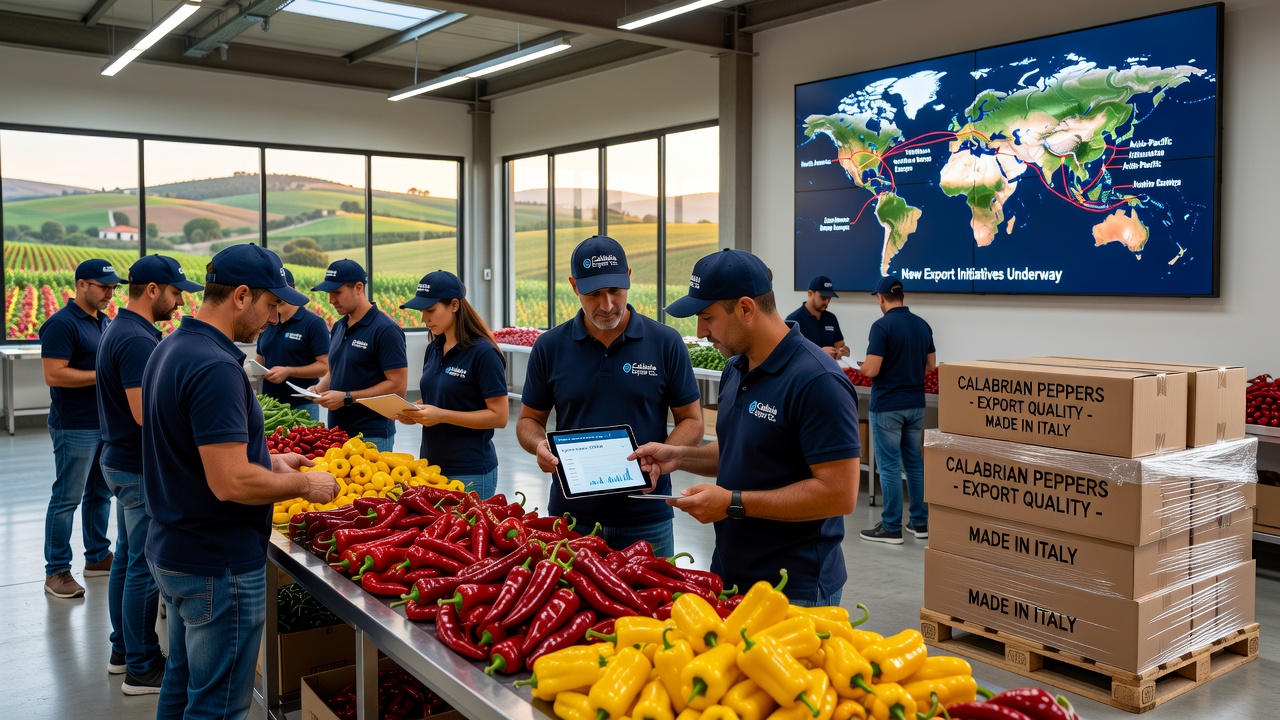
Researchers at the University of Reggio Calabria documented that export contracts now represent 34 percent of total revenue for surveyed farms, up from 19 percent in 2023. The study also found that producers investing in traceability software experienced fewer rejected shipments at border inspections, a factor that further supports the shift. Those who studied this know that compliance with Canadian Food Inspection Agency standards and Australian biosecurity rules requires documentation that many small farms previously handled only for domestic sales.
Challenges and Adaptations
Yet supply chain changes continue to affect pricing stability at home. Local restaurants and processors report occasional shortages during peak harvest weeks because more volume travels abroad, and this dynamic has led some Calabrian chefs to source from neighboring regions. At the same time, growers have introduced staggered planting schedules and invested in greenhouse extensions to extend the season, measures that help meet fixed export timetables. The Agricultural and Horticultural Association of Australia has published guidance on packaging requirements that Calabrian exporters now reference when preparing mixed pallets for Sydney and Melbourne wholesalers.
What's interesting is how digital platforms have accelerated these connections. Several cooperatives list products on EU-wide agricultural marketplaces that match producers directly with foreign buyers, reducing reliance on traditional middlemen. Data shows that farms using these platforms completed an average of 2.4 new contracts per quarter in 2026, compared with 0.9 contracts for those relying solely on regional auctions. Observers note that this pattern mirrors earlier transitions in other Italian regions where domestic logistics constraints prompted similar reorientation.
Conclusion
The redirection of Calabrian pepper output toward export markets reflects measurable responses to domestic transportation and storage adjustments. Government statistics, academic surveys, and trade records all confirm rising volumes shipped abroad, new cooperative formations, and updated compliance practices. As October 2026 figures illustrate, the trend shows no immediate reversal, and continued monitoring of both local infrastructure developments and international demand will determine how far the shift extends.