Taylor Powell · 26 October 2026
Ligurian Basil Producers Confront Water Shortages Through Innovative Irrigation and Revised Trade Routes
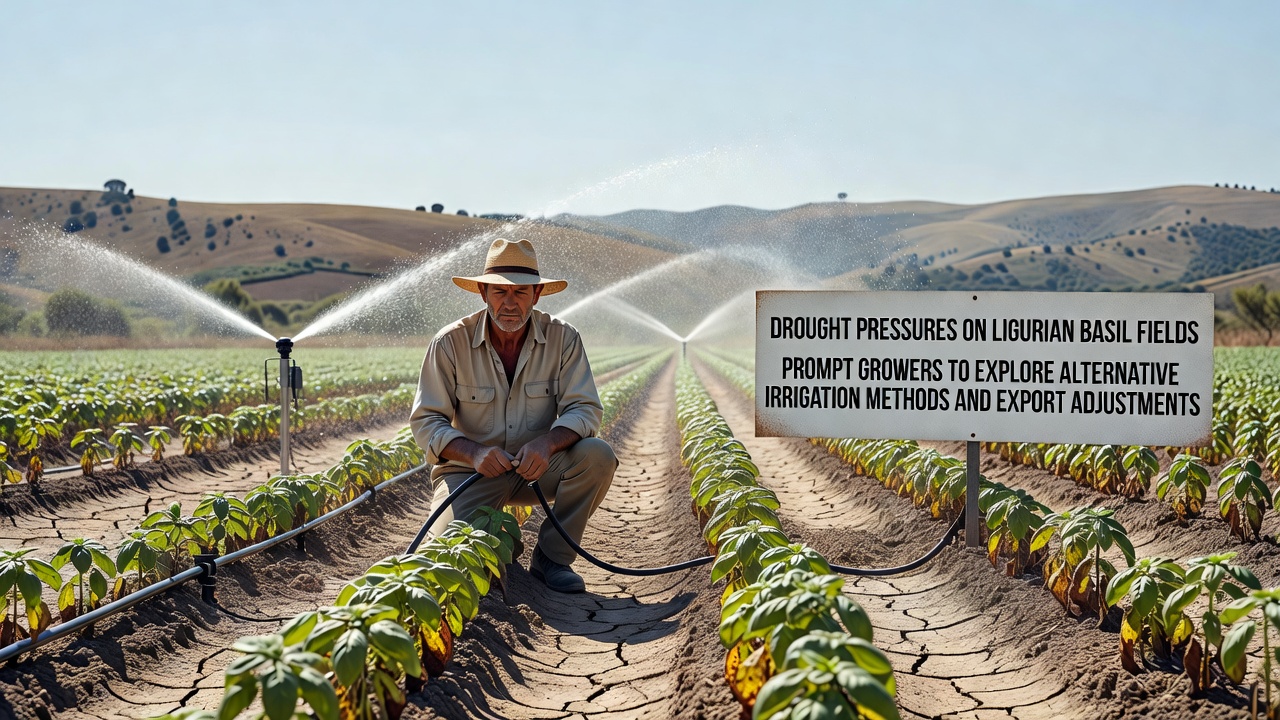
Data from regional monitoring stations in October 2026 indicate that Liguria has recorded 35 percent less rainfall than the 10-year average during the critical spring and summer growing periods, which has placed direct pressure on basil cultivation across the province of Genoa and surrounding areas.
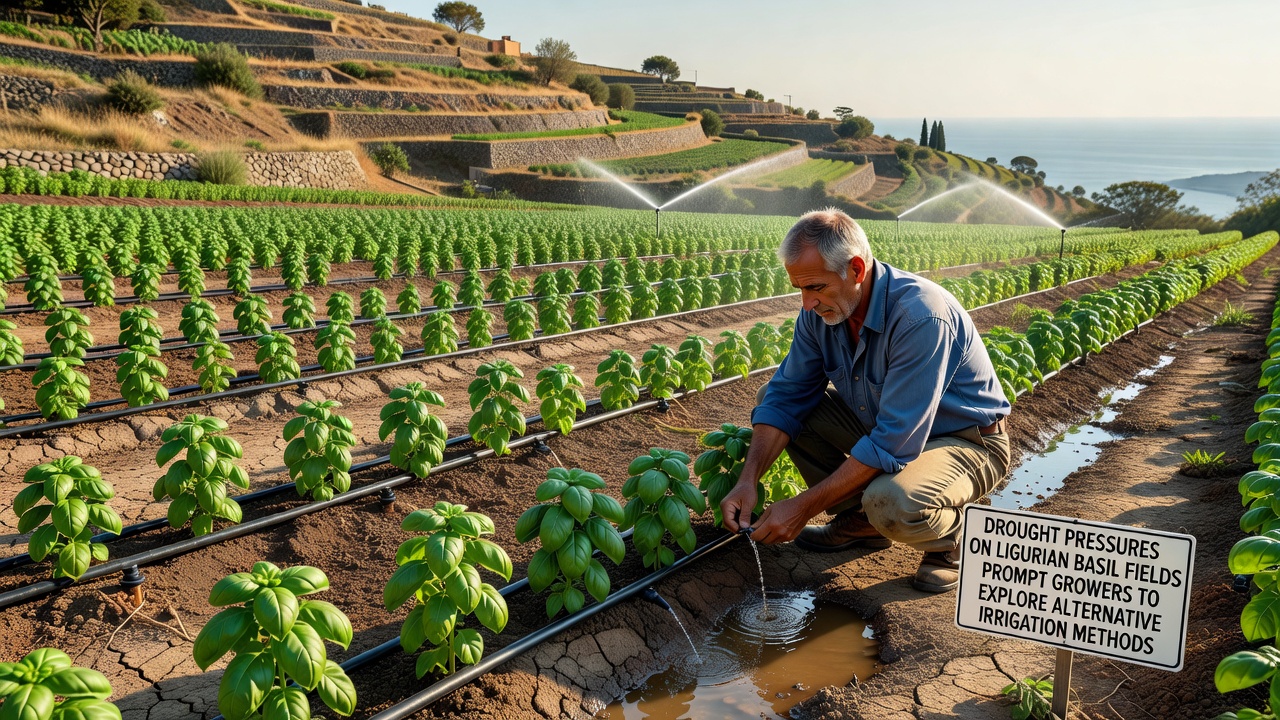
Growers in these zones have responded by testing subsurface drip systems that deliver water directly to root zones at rates calibrated to soil moisture sensors, while others have begun evaluating recycled wastewater treatment units supplied through partnerships with local municipal facilities.
Water Availability Trends and Crop Response
Records compiled by the Italian National Institute of Statistics show that basil acreage in Liguria declined by 12 percent between 2024 and 2026, with the steepest reductions occurring on rain-fed hillside plots where supplemental irrigation access remains limited. Researchers at the University of Genoa documented corresponding yield drops of up to 18 percent per hectare in untreated fields during the same interval.
Basil plants require consistent moisture during the vegetative stage to maintain the essential oil concentrations that define Genovese basil PDO standards, and prolonged dry spells have forced many operations to shorten harvest cycles or reduce plant density to conserve existing water reserves.
Adoption of Alternative Irrigation Techniques
Producers who installed soil-moisture-triggered drip networks reported water savings of 25 to 30 percent compared with overhead sprinkler methods previously in use, according to field trials coordinated by the regional agricultural extension service. Several cooperatives have pooled resources to install small-scale desalination units that process brackish groundwater, although energy costs remain a limiting factor for wider deployment.
One cooperative near Albenga completed a pilot project in September 2026 that combined rainwater harvesting cisterns with automated fertigation, allowing members to maintain output levels despite a 40 percent reduction in municipal water allocations. Similar approaches are under evaluation by additional grower groups along the Riviera di Levante.
Export Market Adjustments
Export statistics released by the Italian Ministry of Agriculture indicate that fresh basil shipments from Liguria to northern European markets fell 15 percent in the first nine months of 2026, prompting several packing houses to redirect volumes toward higher-margin frozen pesto contracts with buyers in North America and Japan. These adjustments reflect both reduced domestic supply and shifting buyer preferences for processed formats that tolerate longer shipping times.
Trade data further reveal that container bookings for air-freighted fresh bunches have decreased while reefer bookings for vacuum-packed pesto have risen, a pattern consistent with efforts to maximize revenue from smaller harvests. Industry observers note that contracts now increasingly include clauses allowing volume flexibility tied to regional water availability forecasts.
Policy and Research Support
The European Commission has allocated additional funds under the 2023-2027 Common Agricultural Policy water-efficiency envelope, with Liguria receiving targeted grants for sensor networks and precision irrigation training programs scheduled to begin rollout in early 2027. Parallel studies funded through the FAO drought resilience initiative are examining varietal selection for lower water-demanding basil lines that still meet PDO sensory profiles.
Local authorities have also streamlined permitting for on-farm reservoir construction, reducing approval timelines from 18 months to under nine months for projects that incorporate micro-filtration and UV treatment components. These regulatory changes have accelerated adoption among mid-sized farms that previously lacked capital for infrastructure upgrades.
Conclusion
October 2026 data confirm that Ligurian basil growers continue to implement irrigation modifications and export recalibrations in response to documented water deficits, with measurable shifts already appearing in both production statistics and trade flows. Ongoing research and policy measures are expected to shape further adaptations in the coming seasons.