Morgan Wagner · 1 September 2026
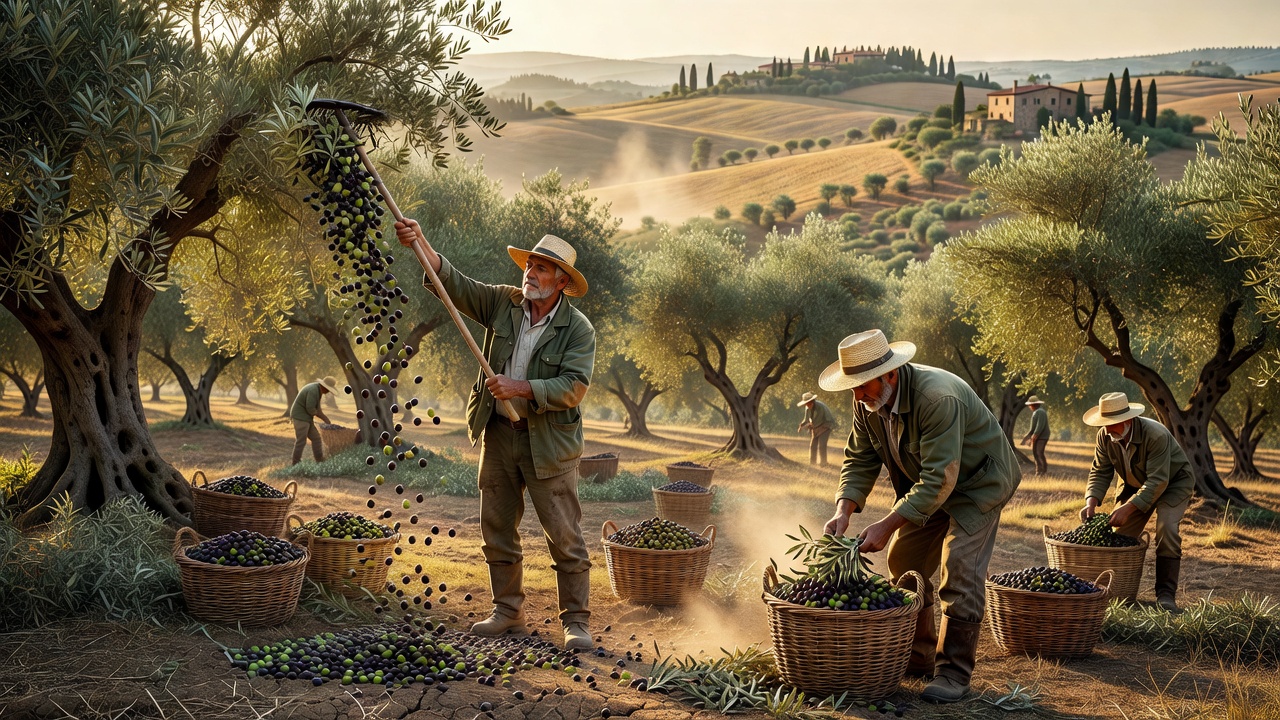
Tuscany's olive growers are celebrating a robust harvest this year, with reports indicating significantly higher yields of olive oil compared to previous seasons. The region's renowned olive groves have benefited from favorable weather conditions, leading to an abundant production that promises to bolster Italy's position in the global olive oil market. Early estimates from agricultural cooperatives point to a 15 to 25 percent increase in output across major growing zones.
Regional Production Estimates
According to local agricultural authorities, production in key areas such as Chianti and Val d'Orcia is expected to increase by up to 20 percent. Experts attribute this success to mild winters and adequate rainfall during the growing season. Farmers have reported healthy fruit development, resulting in oils with rich flavors and high polyphenol content, which are hallmarks of Tuscan extra virgin olive oil. Varieties including Frantoio, Moraiolo and Leccino have shown exceptional resilience, with fruit maturity occurring at optimal times for pressing. The harvest, which typically begins in late October, has seen early indications of quality that surpass expectations. Cooperatives across the region are processing the olives with traditional methods, ensuring that the heritage of Italian olive oil production is maintained while meeting modern standards. Historical data comparisons reveal that this season's volumes approach those recorded in peak years of the past decade, offering relief after several challenging harvests marked by drought and pests.
Impact on Culinary Traditions
This strong yield not only supports local economies but also reinforces Tuscany's culinary heritage. Olive oil is central to many traditional dishes, from bruschetta to ribollita. With increased availability, chefs and home cooks alike will have access to premium products that highlight the unique terroir of the area. Industry analysts suggest that the surplus could lead to stable prices and increased exports to international markets. This development comes at a time when demand for authentic Italian olive oil continues to rise worldwide. Preservation of ancient olive trees and sustainable practices remain priorities for producers committed to passing down their knowledge to future generations. Quality testing by regional consortia confirms elevated acidity levels below 0.2 percent, meeting strict extra virgin criteria and enhancing export competitiveness.