Morgan Wagner · 14 September 2026
Umbria's Truffle Dog Trials See Boom in Global Entries as Italian Harvest Patterns Evolve
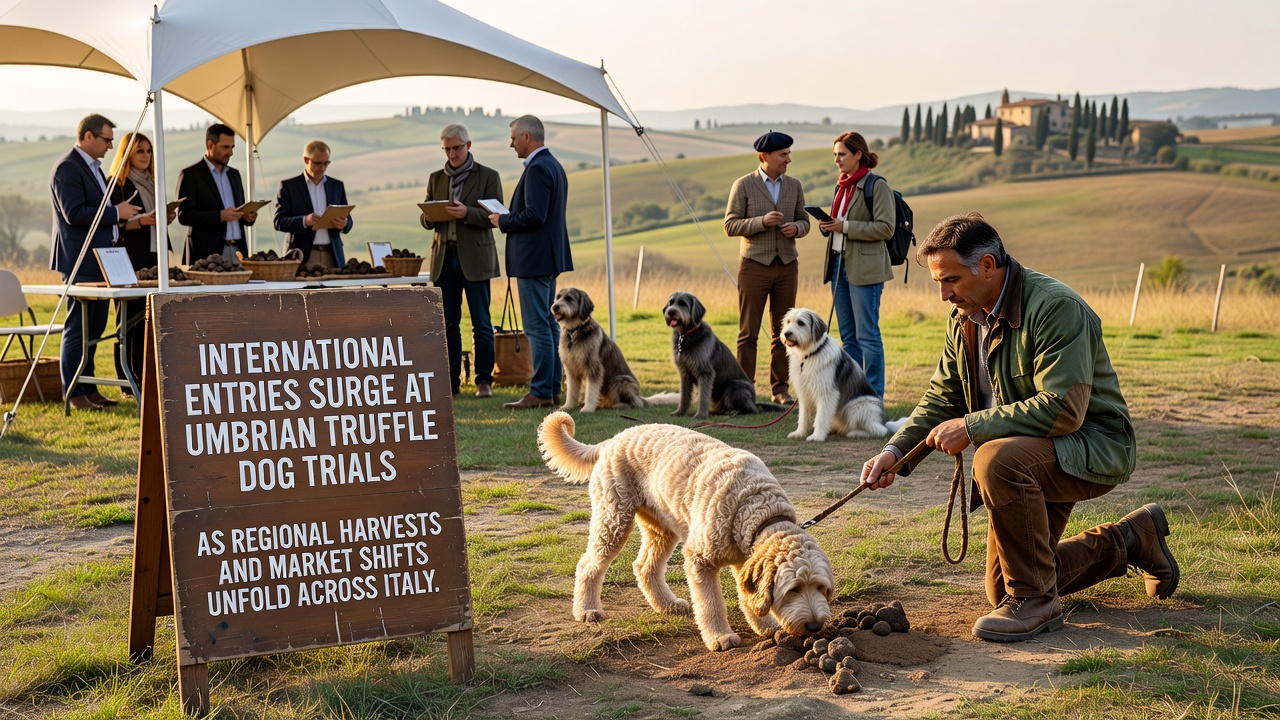
International participation at the annual Umbrian Truffle Dog Trials has climbed sharply this season, with entries from more than a dozen countries registered ahead of the September 2026 events in Norcia and surrounding hill towns. Organizers report that teams from Australia, Canada, France, and the United States now account for nearly one-third of all competitors, a shift driven by expanding commercial truffle cultivation programs in those regions and by changing supply dynamics across central Italy.
Expansion of the Trials Program
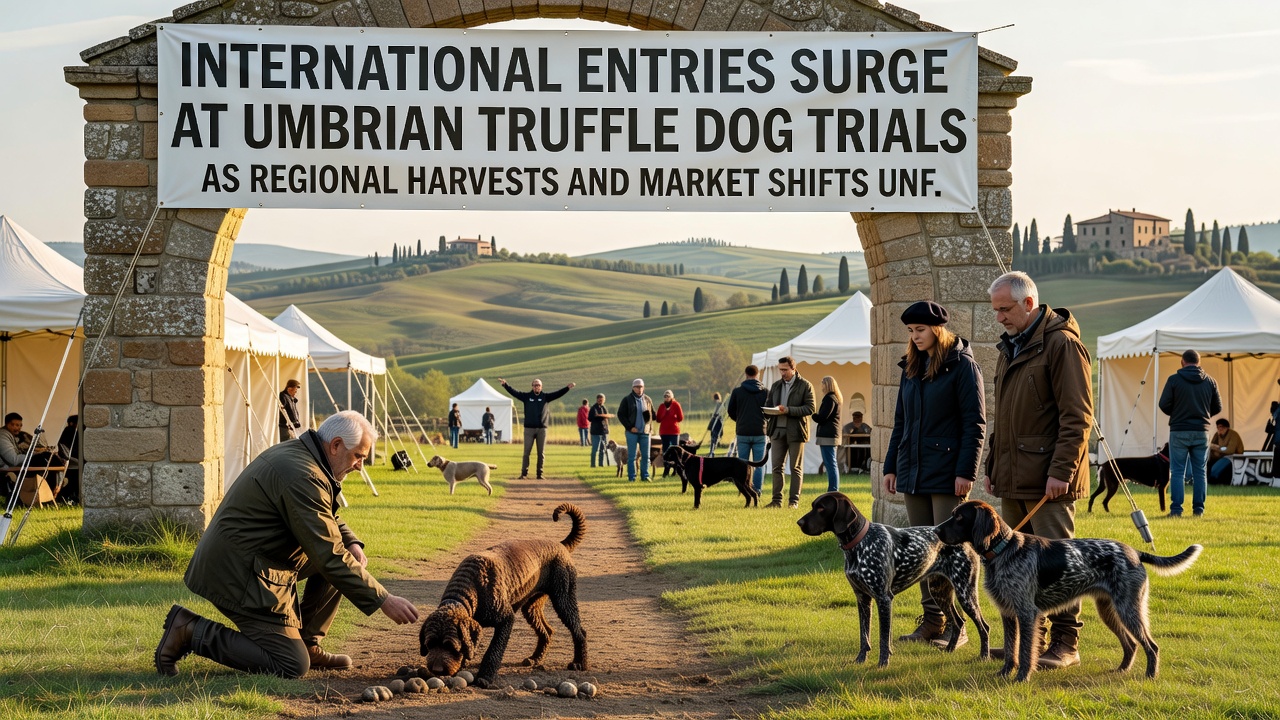
The trials, organized each autumn by the Umbrian Truffle Hunters Association, test dogs on their ability to locate both white and black truffles under timed field conditions. This year the event added an extra day of competition and opened a separate category for handlers who work with Lagotto Romagnolo dogs bred outside Italy. Registration data released by the association shows 187 international teams confirmed, up from 112 in 2025, while domestic entries remained stable at roughly 240.
Training methods differ noticeably between long-established Italian handlers and newer arrivals from overseas. Many international competitors arrived weeks early to acclimate their dogs to Umbrian soil types and to practice on local truffle scents that vary from those found in plantation settings back home. Observers note that the exchange of techniques during evening seminars has become a regular feature of the schedule, with sessions covering GPS mapping of productive zones and scent preservation during transport.
Regional Harvest Developments Across Italy
White truffle yields in the traditional zones of Umbria and Piedmont started slowly in late summer but gained momentum after cooler nights arrived in early September 2026. Regional forestry offices in Perugia and Terni recorded a 14 percent increase in registered collection permits compared with the previous season, according to figures published by the Italian Ministry of Agriculture. In contrast, parts of Tuscany reported more modest finds because of drier soils that limited mycelium activity during the critical summer months.
Black truffle production in the Marche and Lazio areas followed a different pattern. Harvest volumes there rose steadily through August and into September, supported by consistent rainfall that maintained soil moisture levels around established oak and hazel groves. Market analysts tracking wholesale prices at the Sant'Angelo in Vado and Acqualagna auctions recorded an average drop of eight percent for extra-grade black truffles relative to 2025 levels, a movement attributed to larger available volumes from both Italian and emerging Balkan suppliers.
Market Shifts and Supply Chain Adjustments
Export statistics compiled by the Italian Trade Agency indicate that fresh and preserved truffle shipments to North America and northern Europe increased by 22 percent in the first eight months of 2026. The growth coincides with new cold-chain protocols that allow whole fresh specimens to reach overseas markets within 48 hours of harvest. Several large Italian wholesalers have opened dedicated packing facilities near the main trial venues, a development that lets visiting competitors purchase product directly after competition rounds conclude.
Price transparency has improved through an online reporting system maintained by the National Truffle Observatory, which publishes daily averages from the major Italian markets. Handlers from overseas report using these figures to calibrate their own production forecasts, especially as plantation yields in Western Australia and British Columbia begin to overlap with the Italian season. The resulting competition has prompted some Umbrian producers to emphasize origin certification and traceability labels that distinguish wild-collected product from cultivated alternatives.
International Training and Knowledge Exchange
Research teams from the University of Western Australia have maintained a presence at the trials for the past three seasons, collecting soil samples and recording dog search patterns for comparative studies on plantation versus natural woodland environments. Their published findings, available through the university's agriculture faculty site, highlight how microbial communities differ between the two settings and how those differences affect scent strength. Local handlers have begun incorporating some of the data into their own training routines, particularly when preparing younger dogs for variable terrain.
European Union agricultural programs have also funded a small demonstration plot near the trial grounds where attendees can examine irrigation and canopy management techniques used in newer cultivation regions. The plot, managed jointly by the Regional Agency for Agricultural Development and visiting researchers from France's INRAE institute, shows side-by-side rows of inoculated hazel trees under different shade regimes. Visitors receive printed summaries of yield data collected over the last four years, allowing direct comparison with traditional Umbrian groves.
Conclusion
The September 2026 Umbrian Truffle Dog Trials therefore serve both as a competitive arena and as a practical meeting point where shifting harvest realities and expanding international production intersect. Registration numbers, harvest reports from regional offices, and trade data released by national agencies together illustrate a sector adapting to wider geographic participation while retaining its core focus on skilled dog-and-handler teams working the historic landscapes of central Italy.