Quinn Powell · 28 September 2026
Venetian Seafood Auctions Reveal Adriatic Supply Patterns Affecting Local Pricing
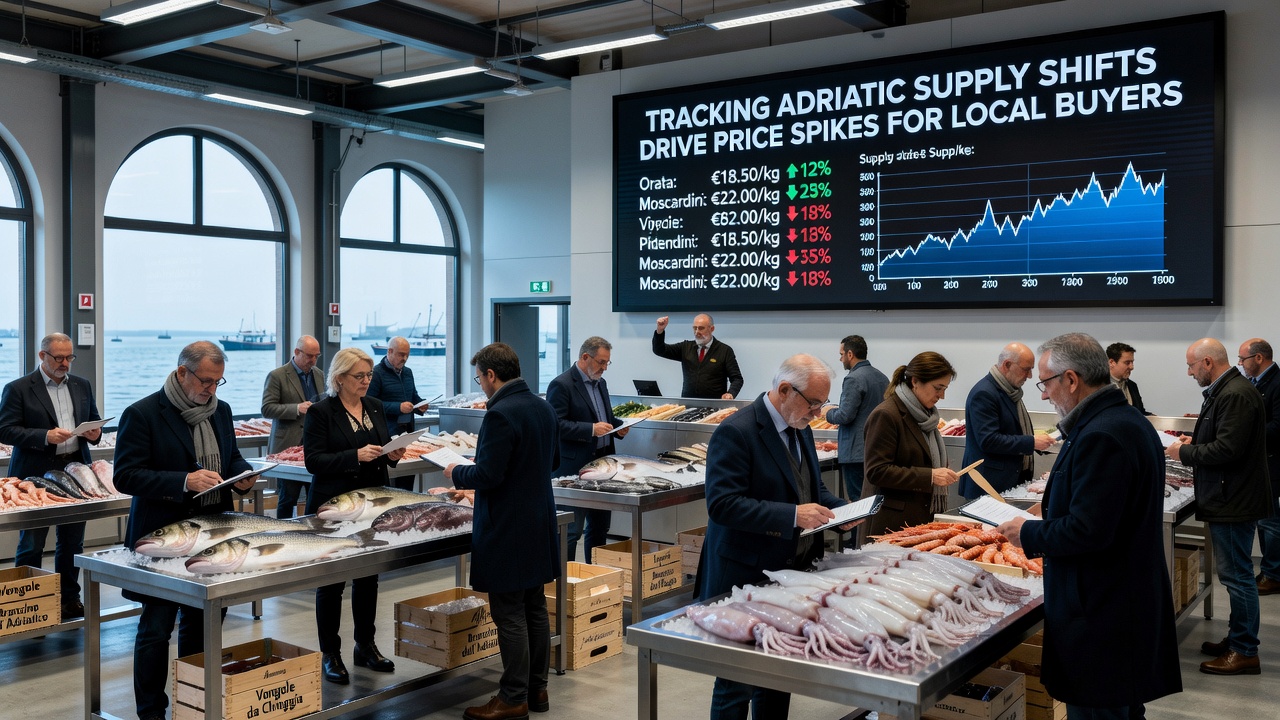
Venetian seafood auctions operate as central hubs where daily catches from the Adriatic reach buyers through structured bidding processes that reflect real-time supply conditions. These markets track volumes of species such as anchovies, sardines, and various shellfish while noting how environmental and regulatory factors in the Adriatic basin alter availability. Data compiled by regional fisheries authorities show that shifts in water temperatures and fishing quotas directly correlate with fluctuations observed at the auction blocks.
Auction Operations and Daily Tracking Methods
Buyers gather early each morning at facilities near the Rialto area where lots arrive sorted by species, size, and origin port. Auctioneers announce starting bids based on estimated quantities landed overnight, and electronic systems log every transaction to create transparent records for price analysis. Observers note that these records allow local restaurants and retailers to anticipate cost changes when Adriatic catches decline due to seasonal migrations or temporary fishing restrictions. In September 2026, reports from the European Commission indicated reduced anchovy landings compared to the prior month, prompting immediate adjustments in opening bids for that category.
Local participants rely on these auctions because they provide direct access to fresh product without intermediary markups, yet the system transmits supply signals quickly across the network of regional ports. When weather events limit vessel departures from ports such as Chioggia or Trieste, the reduced inflow registers within hours and elevates prices for remaining stock. Researchers at institutions monitoring Mediterranean fisheries have documented similar patterns over multiple seasons, confirming that even short-term disruptions produce measurable spikes lasting several days.
Adriatic Supply Factors and Price Responses
Multiple variables influence the volume reaching Venetian auctions, including EU-mandated quotas, water quality changes, and predator population dynamics. Data from Italian national fisheries statistics reveal that quota reductions for certain demersal species in 2025 led to tighter supplies the following year, with corresponding increases in average transaction values. Buyers adjust procurement strategies accordingly, often shifting toward alternative species when primary catches fall short. Such substitutions occur routinely because auction data feed directly into inventory planning software used by Venetian wholesalers.
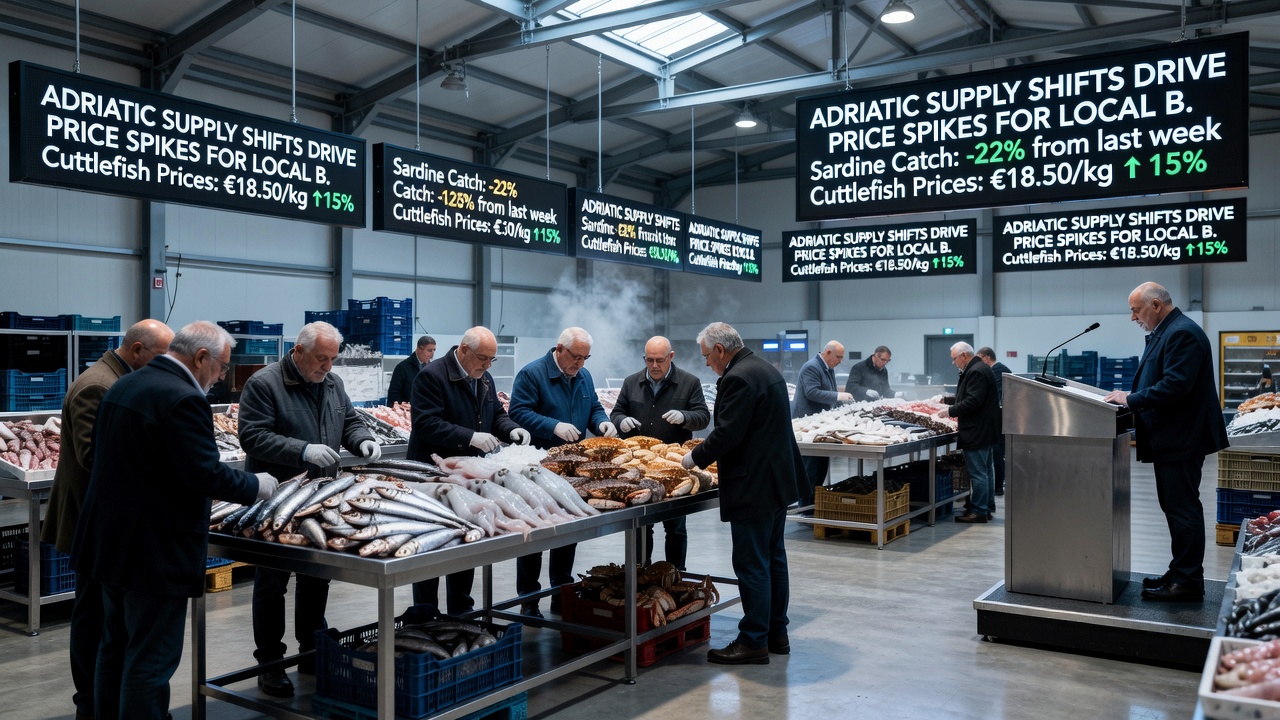
Climate-related shifts also play a documented role. Rising sea temperatures have altered the distribution of pelagic fish in the northern Adriatic, according to studies published by marine research centers. When schools move farther offshore or into neighboring waters, landing figures at Italian ports decline and auction prices respond within the same week. One analysis of transaction logs from 2024 through mid-2026 showed price increases of 18 to 25 percent for sardines during periods of lower reported catches.
Impact on Local Buyers and Procurement Adjustments
Restaurants, fishmongers, and institutional kitchens in Venice monitor auction outcomes closely because their margins depend on predictable input costs. When supply contracts push prices higher, many establishments revise menus or source from secondary markets in neighboring regions. Records maintained by the Venetian Chamber of Commerce indicate that such adaptations increased during the first half of 2026 following several weeks of below-average landings. The same data set shows that buyers who tracked historical patterns could time larger purchases during brief supply recoveries, thereby mitigating overall expenditure.
Smaller operators without dedicated procurement staff often form informal networks to share real-time auction results. These networks distribute information about species availability and prevailing price levels, enabling collective decisions that stabilize individual business costs. Government-supported training programs offered through regional agricultural agencies have expanded access to digital tracking tools, allowing more participants to interpret supply signals without relying solely on physical presence at the auctions.
Monitoring Tools and Data Sources
Modern auction systems integrate with broader databases maintained by the Food and Agriculture Organization of the United Nations, which compiles Mediterranean landing statistics for comparative analysis. Local authorities cross-reference these international figures with port-level reports to forecast upcoming supply conditions. In September 2026, preliminary data released by the Italian Ministry of Agriculture highlighted a modest rebound in shellfish volumes after earlier quota adjustments took effect, information that circulated quickly among auction participants and helped moderate subsequent price movements.
Academic partnerships have produced open-access dashboards that visualize auction trends alongside environmental indicators such as sea surface temperature and chlorophyll levels. These resources draw from satellite observations and vessel monitoring systems, providing context for why certain species appear in greater or lesser quantities at any given time. Buyers who consult these combined datasets gain advance notice of potential price pressure before it appears at the auction floor.
Conclusion
Venetian seafood auctions function as sensitive indicators of Adriatic supply dynamics, transmitting changes in catch volumes directly into pricing signals for local buyers. Through systematic recording of transactions and integration with fisheries databases, participants access information that supports timely procurement decisions. Continued monitoring of quota policies, environmental conditions, and landing statistics will determine how these markets evolve in response to ongoing shifts in the Adriatic ecosystem.